

Overview
The Chapi Mine is located south of the city of Arequipa in Peru. Historical, small-scale copper production, which is poorly documented, occurred intermittently from the 1930s through the early 1980s. Subsequently, between 2006 and 2012 the Chapi Mine produced approximately 5,000 to 8,500 tonnes per annum at reported grades of 0.59% – 1.04% copper.
The deposits at Chapi are comprised of sandstone-hosted copper mineralized mantos, partially oxidized and secondarily enriched, that are related to a series of porphyry intrusions. The Chapi Mine lies between, and directly along trend from, some of the world’s largest producing porphyry copper deposits, including Cerro Verde and the Cuajone-Quellaveco-Toquepala cluster. All of these deposits and districts, as well as others, comprise the Paleocene-Eocene Cu-Mo porphyry belt of Southern Peru, and contribute to making Peru the second ranked copper producer in the world.
The land package is owned by Minera Pampa de Cobre S.A.C. (indirectly owned by Quilla Resources Inc.) (MPC). Quilla’s near-term plan is to restart Chapi Mine operations utilizing the existing SX-EW (solvent extraction-electrowinning) process circuit, which is designed to produce a nominal 10,000 tonnes per annum of copper cathode, with the option to potentially increase capacity in the future. Initially, the restart plan is contingent on additional drilling and metallurgical test work, updated resource and reserve modelling, rehabilitation of the mining and leach-processing infrastructure, and updated environmental and other permits. Quilla and MPC have raised the necessary capital to complete the Chapi restart program, and anticipate initial production in H1 2026.
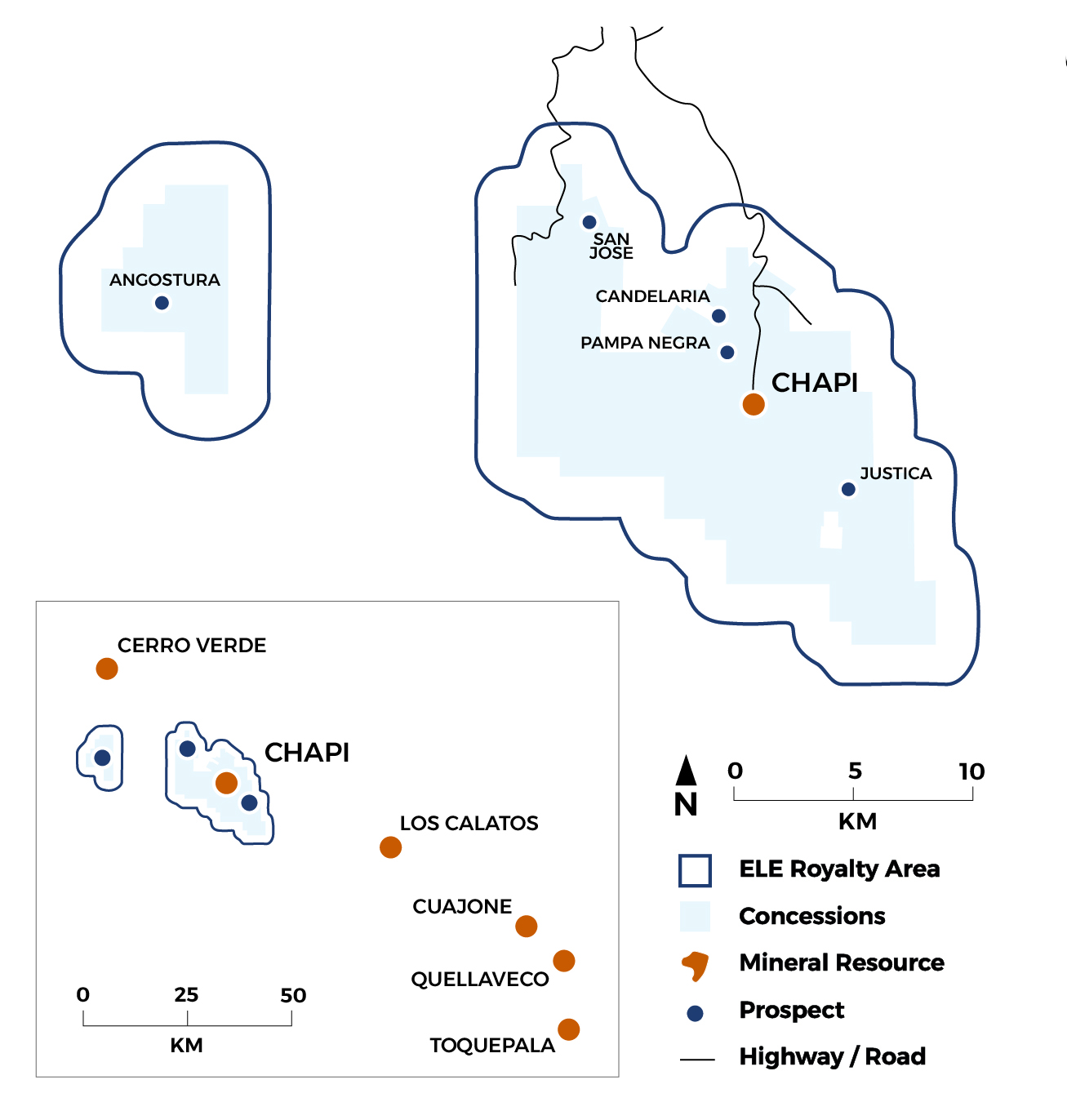
Nearby mines and deposits provide context for the project, but do not necessarily indicate similar size, styles or grade of mineralization within the project.